Week 4: Anti-Forensics Techniques-P1

Week 4 - Anti-Forensics Techniques

Ali Jaddoa
Ali.Jaddoa@roehampton.ac.uk

25/26
Week 4: Anti-Forensics Techniques-P1

What is Anti-Forensics?

width:1OO% center


25/26
Week 4: Anti-Forensics Techniques-P1

Anti-Forensics

Anything purposefully performed to evade detection and make it difficult for the forensic investigation to take place.

Goals of Anti-Forensics

  • Interrupt and prevent information collection
  • Make the investigator’s task of finding evidence difficult
  • Hide traces of crime or illegal activity
  • Compromise the accuracy of a forensics report or testimony
  • Delete evidence that an anti-forensics tool has been run

25/26
Week 4: Anti-Forensics Techniques-P1

Anti-Forensics: Not to Get Caught

width:1OO% center


25/26
Week 4: Anti-Forensics Techniques-P1

Anti-Forensics: Techniques

Attackers use these techniques to defend themselves against the revelation of their actions during criminal activities.

width:1OO% center


25/26
Week 4: Anti-Forensics Techniques-P1

Scenario:

Imagine you're investigating a cybercrime case. You have a hard drive from a suspect’s computer. But how do you prove that the files you examine haven’t been altered?

I.e.

  • What if the suspect tries to replace a key document with a forged version? Or what if an insider tampers with evidence before it reaches court?

25/26
Week 4: Anti-Forensics Techniques-P1

Hashing to the rescure

This is where cryptographic hash functions become essential.

  • They allow us to verify the integrity and authenticity of digital evidence.

width:1OO% center


25/26
Week 4: Anti-Forensics Techniques-P1

Introduction to Cryptographic Hash Functions

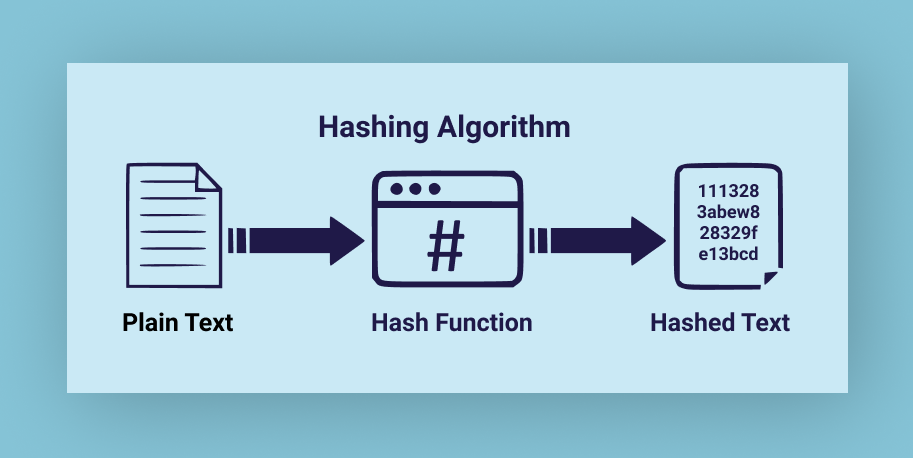
  • Definition: A cryptographic hash function (CHF) is a mathematical algorithm that converts input data into a fixed-size hash value (or digest), unique to that data.

width:1OO% center


25/26
Week 4: Anti-Forensics Techniques-P1

Cryptographic Hash Functions: Core Properties:

  • Integrity verification; Tamper detection; Evidence authentication
  • Password hashing
  • Cryptographic protocols

Attackers might alter timestamps or overwrite data, but if even a single byte changes, the hash value will change, alerting investigators.


25/26
Week 4: Anti-Forensics Techniques-P1

Hash Functions: One way


25/26
Week 4: Anti-Forensics Techniques-P1

Hash Functions

  • Input (m): Any data (text, images, files, disk volumes)
  • Hashing Algorithms:
    • MD5, SHA-256, SHA-3
    • RIPEMD-320, Blake, Gost
    • Haval, Snefru, Whirlpool
  • Output (h, Fixed-Length):
    • 128-bit (MD5)
    • 256-bit (SHA-256)
    • 512-bit (SHA-512, Whirlpool)

25/26
Week 4: Anti-Forensics Techniques-P1

Common Hash Functions: SHA

  1. SHA (Secure Hash Algorithm): Designed by NSA, published by NIST.
  • and are widely used

    My name is Ali.
    
    93dcd29592078477d5e87c6289a33f7dbc8711eeed28451a2d626fbc10c287dc
    
    My name is Ali
    
    8100189f7b5064b7eac0510cbdaeadb7d84662a146a5c85fab14579e3686fb37
    

25/26
Week 4: Anti-Forensics Techniques-P1

Common Hash Functions: things to consider

  • Take an input of any size
  • Create a fixed size string
  • Quick to compute
  • The hash should be unique:
    • Different inputs should never create the same hash
    • If they do, it's a collision

25/26
Week 4: Anti-Forensics Techniques-P1

Collision: Two different inputs produce the same hash output

width:1OO% center

  1. MD5 (Message Digest Algorithm 5):

    • Produces a 128-bit hash.
    • Vulnerable to collisions; use in cryptography is discouraged.

25/26
Week 4: Anti-Forensics Techniques-P1

3. RIPEMD (Race Integrity Primitives Evaluation Message Digest):

  • Developed in Europe.
  • RIPEMD-160 is commonly used in digital signatures and .
    • Used in various security protocols such as TLS, IPsec, and SSL to provide message integrity and authenticity.

TLS, SSL and IPSec are protocols that encrypt data sent over the internet.


25/26
Week 4: Anti-Forensics Techniques-P1

width:1OO% center


25/26
Week 4: Anti-Forensics Techniques-P1

Practical Hashing

1. Verify a Downloaded File:

  • Hashes are often provided on the download page.
  • Compare the hash of the downloaded file with the provided hash value:
    • e47df00b078b5f9daed0871f0e90d33f
      • ubuntu-17.10-beta2-desktop-amd64.iso
    • af906ba5d5f13b4b02b98351a819e3a7
      • ubuntu-17.10-beta2-server-amd64.iso
    • 63177ed9a01f2116671655b£06266e5d
      • ubuntu-17.10-beta2-server-i386.iso

25/26
Week 4: Anti-Forensics Techniques-P1

2. Password Storage:

  • Instead of storing plaintext passwords, store a hash.
  • During authentication, compare the stored hash with the hash of the entered password.
  • Important: No one ever knows your actual password, only its hash.
    width:1OO% center

25/26
Week 4: Anti-Forensics Techniques-P1

2. Password Storage: More

Hashing Alone DOESN'T Fully Mitigate Common Issues
width:1OO% center

  • Many users choose common, easily guessable passwords (e.g., 123456, password).
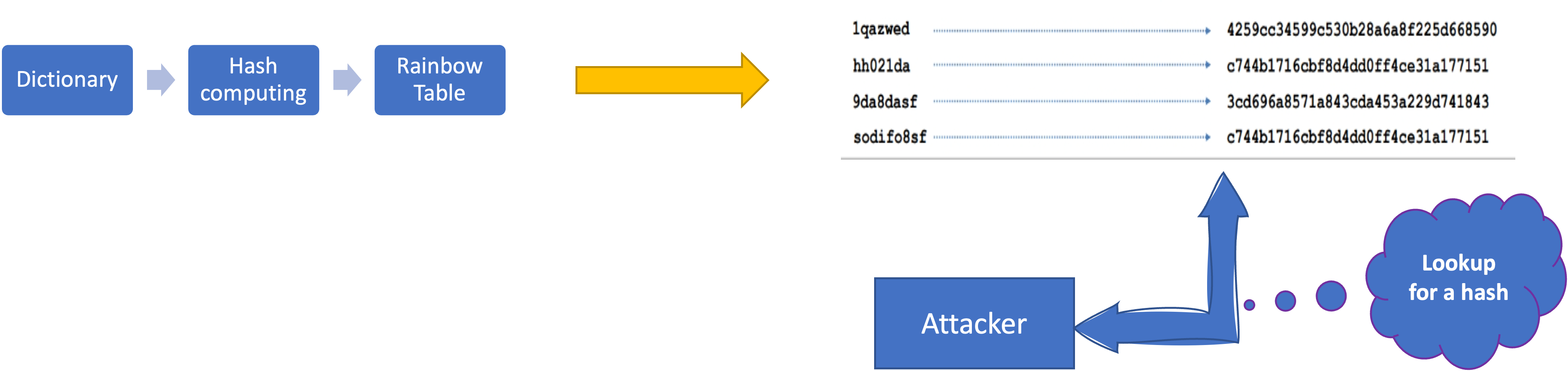
  • Attackers leverage rainbow tables (precomputed hash databases) to crack hashes instantly.
  • If two users have the same password, their hashes will be identical, making breaches more severe.

25/26
Week 4: Anti-Forensics Techniques-P1

2. Password Storage: More

The Solution : Adding Salt

  • A random, unique value (salt) is added to each password before hashing.
  • This ensures that even if two users have the same password, their stored hashes will be different.
    width:1OO% center

width:1OO% center


25/26
Week 4: Anti-Forensics Techniques-P1
Password Salt Hash
UoR a9c43be948c5cabd56ef2bacffb77cdaa5eec49dd5eb0cc4129cf3eda5f0e74c
UoR gsEVx 35172b0b7c9c3002bbf02908b3f330dde5f5eda42b0b4d553ae0759eb25686c8
UoR LTBkP b9909221fbbda70bea27644b84443ddb68f78ede2253fa8f6409fd8b7602599a
UoR HTsBK cf1c25063093411faefb09198356de6775955b5ff6e0fe9aab665a3e95d11e25
UoR MnNEo 9965&da1af957af6f26790189f0a1957018c0962361580c5bd5fc50d26b71579

25/26
Week 4: Anti-Forensics Techniques-P1

3. Digital Signatures:

  • Hash functions generate a unique hash for a message, encrypted with the sender’s private key to create a digital signature.
  • The recipient decrypts the sender’s hash with their public key and compares it with the message’s hash.
  • Provides:
    • Integrity: Ensure the message hasn't been altered.
    • Non-repudiation: Sender cannot deny sending the message.
    • Authenticity: Verifies the sender’s identity.
    • Informed consent: Confirms the sender’s intent.

25/26
Week 4: Anti-Forensics Techniques-P1

3. Digital Signatures: Example

width:1OO% center


25/26
Week 4: Anti-Forensics Techniques-P1

Password attacks

width:1OO% center


25/26
Week 4: Anti-Forensics Techniques-P1

Passive: Man-in-the-Middle (MITM) Attack

An attacker intercepts communication between the user and authentication platform to steal data (e.g., passwords).


25/26
Week 4: Anti-Forensics Techniques-P1
  • Unsecured Channels: Data is easily readable if not encrypted.
  • No Brute-Forcing: The attacker captures passwords directly without guessing.
  • Hard to Execute: Requires trust from one or both parties.
  • Mitigation: Invalidating traffic or using encryption can prevent the attack.

25/26
Week 4: Anti-Forensics Techniques-P1

Active: Guessing/Brute Force Attack

The attacker tries different passwords until one works, often succeeding with weak passwords.

  • Time-Consuming: Takes longer with strong passwords.
  • High Bandwidth: Requires significant resources.
  • Easily Detected: Multiple failed attempts trigger alerts.
  • Core Problem: Weak passwords.

25/26
Week 4: Anti-Forensics Techniques-P1

Offline Attacks: RAINBOW Table

Rainbow tables use precomputed hashes for dictionary words and compare them to database values.

  • Storage: Requires large storage for the precomputed hashes.
  • Succeeds with Weak Hashing: Effective with weak hashing algorithms and no salt.
  • Defense: Stronger algorithms like bcrypt or scrypt can mitigate the attack.

width:1OO% center


25/26
Week 4: Anti-Forensics Techniques-P1

Scenario: Reverse Hash Lookup

You are working with a user named jack@abcd12345.net. Jack has submitted a password, but the password has been stored as a hashed value for security purposes. Your task is to determine the original plaintext password from the hash.

Given Hash:

  • Hash to Lookup: 5c4bf758b3e4a924c49c4cd683cc638b

Steps:

  1. Visit the What’s My IP Hash Lookup Tool.
  2. Copy and paste the hash into the tool.
  3. Click the "Reverse Hash" button.

25/26
Week 4: Anti-Forensics Techniques-P1

Lab:


25/26

![width:1OO% height:300px center](../../figures/hashing.png)

## Activity: In a small group(3) and choice one. 1. **IPSec VPN Breach Scenario** | | |--------------------------------------------------------------------------| | 1. How do digital signatures work in IPSec to ensure data hasn’t been tampered with? | | 2. What can digital signatures help prove when verifying the integrity of data sent through the VPN? | | 3. If the VPN data was altered, how would the digital signature help investigators figure it out? | 2. **Fake SSL/TLS Certificate Scenario** | | |--------------------------------------------------------------------------| | 1. What do digital signatures do in SSL/TLS certificates to make sure the website is legitimate? | | 2. How can digital signatures help prevent attacks like man-in-the-middle attacks where data might be altered? | | 3. How could investigators check if the SSL/TLS certificate was fake or tampered with using digital signatures? | ---
![bg right 80%](../../figures/rbt.png)